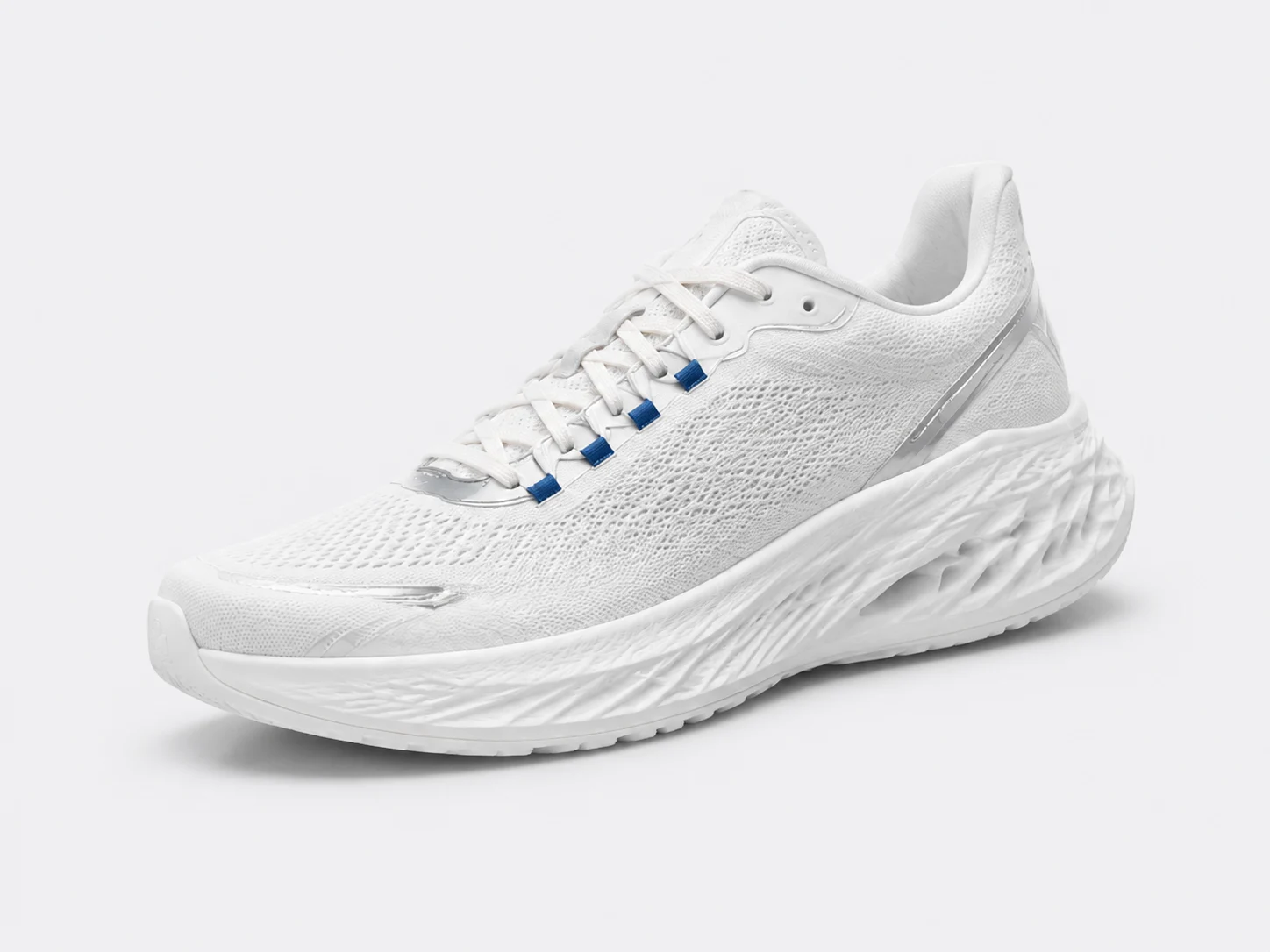
For the same handheld vacuum, I would consider the sofa-crumbs image for Meta but return to the plain product shot for Google Shopping. For ChatGPT Ads, the first thing I would add might not be an image at all. It might be an answer on the product page: why own this if you already have a full-size vacuum? Before asking which platform is better, I want to know what the customer will be doing when the ad reaches them.
Are customers browsing, searching or asking?
This table compares Facebook and Instagram feeds, Google Search / Shopping and ChatGPT Ads. It does not cover YouTube or Google display campaigns. The product examples are suggested starting points, not platform eligibility rules.
| Dimension | Meta ads | Google Search / Shopping | ChatGPT Ads |
|---|---|---|---|
| How the ad appears | Relevant advertising while someone browses content. | Search ads or product cards during an active search. | Relevant advertising while someone discusses a need. |
| Shopper's current question | Does this matter to me? Shopping may not be planned. | Which item or seller fits? They may still be researching. | What suits my situation? Detail does not guarantee intent to buy. |
| Main opportunity | Introduce something the person was not looking for. | Respond to expressed demand and enter product or price comparisons. | Explore relevance to a described need, beyond a short search phrase. |
| Main constraint | Ongoing creative work. Enjoying the ad is not buying. | Competition, delivered price, shipping and the page all matter. | Verify account and market access; acquisition cost still needs testing. |
| Products I would consider | Home products with demonstrable uses, or clothing with styling appeal. | Products already searched for by name, use or model. | Products needing explanation of fit, size or use. |
| First preparation | One buying reason with a real demonstration or clear situation. | Search: copy and page. Shopping: product images and data. | Concise copy and imagery, plus answers to specific product questions. |
| Common misconception | Only works for cheap impulse purchases. | A search guarantees an order. | Payment buys an AI recommendation in the answer. |
Appearing during browsing does not mean random interruption. Meta personalizes ad retrieval and ranking. An active search is not the only way an ad can be relevant. Meta:How personalized ad retrieval works
Google Shopping primarily matches using product data rather than keywords. It can run through Performance Max, which also reaches other Google channels; not all PMax results are Search traffic. Google:About Shopping ads
ChatGPT Ads means advertising in ChatGPT, not asking it to write copy or paying for an organic recommendation. OpenAI describes ad materials including a title, body, image and destination URL. OpenAI:Campaign management
What does a click cost? Start with what you can afford
When a seller asks about CPC, the question underneath is often: can my margin support this? I would work through the order economics before memorizing a platform average. All amounts below are hypothetical, in USD.
An order brings in $60 after discounts, excluding collected taxes. Goods, fulfillment, payment fees and expected return losses total $36, leaving $24 before ads. Retain $8 toward overhead and profit, and the target acquisition cost is $16.
- Target purchase cost (CPA)
- $60 − $36 − $8 = $16
- Affordable average CPC
- Target purchase cost × click-to-purchase rate
| Hypothetical purchases per 100 site clicks | Purchase rate | Average CPC ceiling at a $16 CPA target |
|---|---|---|
| 1 purchase | 1% | $0.16 |
| 2 purchases | 2% | $0.32 |
| 3 purchases | 3% | $0.48 |
If 100 clicks produce two purchases, average CPC needs to stay around $0.32 to fit those economics. At $0.80, being cheaper than a competitor would not be enough. Purchase rate, order contribution or the advertising approach would need to change.
Published reports still provide context. WordStream's $5.42 median CPC covers 13,474 US Google and Microsoft Search campaigns from April 2025 through March 2026, across industries. It is not a Shopping price or a forecast for this vacuum. WordStream:Google & Microsoft search benchmarks 2026
Meta traffic objectives are not interchangeable with purchase objectives either. For ChatGPT Ads, this research found no reliable comparable public CPC benchmark. OpenAI's $2 documentation example is a bid illustration, not an average click price. Optimizing for purchases does not mean paying only when a sale happens; check your account's billing and configuration. OpenAI:Bidding and budgets
For an estimate, start with account history for the same country and objective; for Google, also investigate relevant search estimates. With no usable history, set an affordable test-loss limit rather than multiplying an industry figure by 100 clicks and calling it a budget.
Clicks can cost three times more and orders still cost less
Consider two illustrative options, not results from any platform. The product and order value are the same:
| Illustrative option | Spend for 100 clicks | Purchases / purchase rate | Cost per purchase |
|---|---|---|---|
| A · $0.50 per click | $50 | 1 / 1% | $50 ÷ 1 = $50 |
| B · $1.50 per click | $150 | 5 / 5% | $150 ÷ 5 = $30 |
B's clicks cost three times as much, yet each order costs $20 less to acquire. Against the previous section's $16 target, both A and B cost too much. Finding the relatively better option is not the same as finding one worth scaling.
For a particular product, the channel that consistently produces valid purchases at an acceptable cost deserves more attention. This example only demonstrates arithmetic; one or five orders cannot establish a winner. ROAS measures revenue relative to ad spend, not profit margin.
Keep product, market, offer and observation period consistent. Record attribution windows and separate new from returning customers. Platforms may claim the same order, so reconcile with the store rather than adding their totals. Brand searches should not be treated as equivalent to ads reaching unfamiliar shoppers.
How I would rewrite one product for three channels
A · Identify the product
 Enlarge image
B · Recognize a situation
 Enlarge image
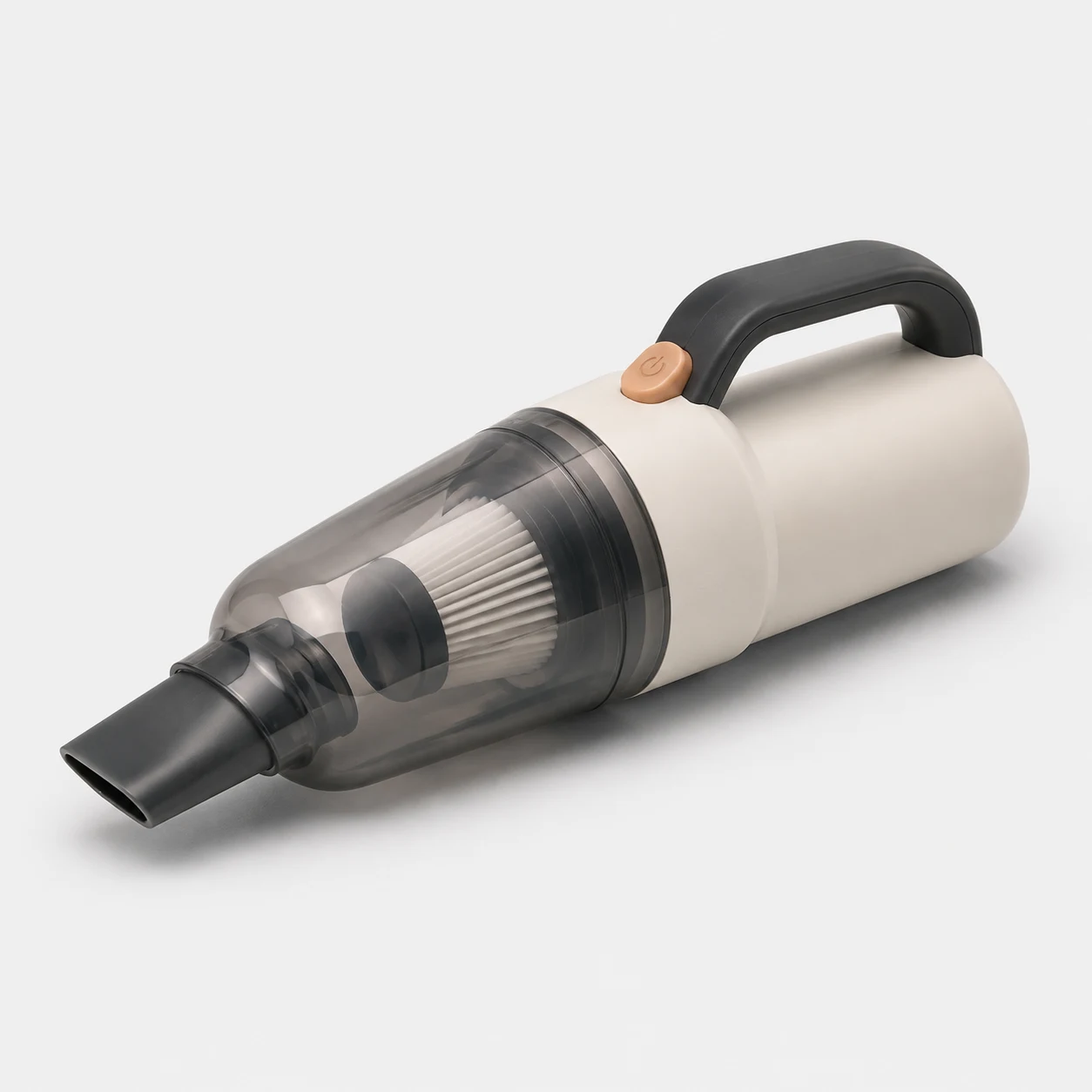
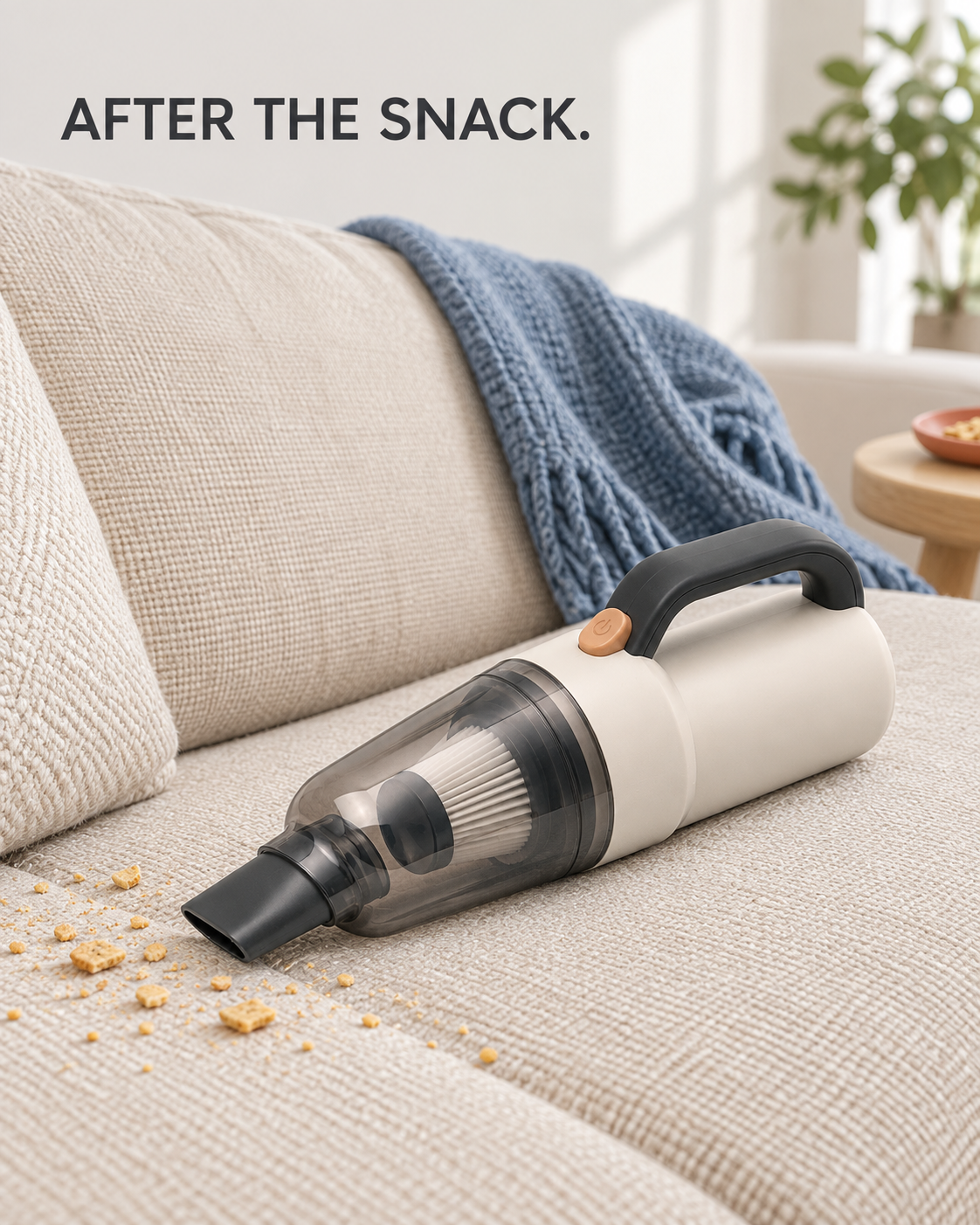
A makes the orange button, dark handle and clear dust cup easy to recognize. B retains those cues and adds a sofa and cracker crumbs. It does not say powerful suction or whole-home cleaning. It points to something smaller: the mess left after a snack.
B does not show crumbs being removed or a real test. Both images are AI examples, not evidence of suction, runtime or cleaning performance. The following drafts are editorial work, not campaign records. Before adapting them for a real SKU, verify the uses and deliver the information promised on the page.
Meta: start with a recognizable moment
“AFTER THE SNACK.” and crumbs on a cushion need little explanation. “High-quality cordless handheld vacuum” would be a fuller product description, but a weaker reason to stop. I would keep the first draft about that one small moment.
- Image
- B: retain the sofa, crumbs and AFTER THE SNACK. headline.
- Body draft
- The snack is gone. The crumbs stayed. Take a closer look at a handheld vacuum for the little mess left behind.
- Page follow-through
- Show the real product cleaning a cushion, then explain tools, suitable surfaces and emptying the dust cup.
I left out one-pass cleaning, silent operation and pet-hair promises. Writing them confidently would not make them true. The first question is whether this scene brings purchase-minded visits, not how many likes it collects.
Google: replace “interesting” with “what I was looking for”
Suppose the query is “handheld vacuum for sofa crumbs.” This is an illustrative phrase, not measured search demand. Use Keyword Planner for relevant demand and estimates, then review search terms, clicks and orders from existing campaigns. An invented query is not a reason to commit budget. Google:Use Keyword Planner
- Two headlines
- Handheld Vacuum / For Sofa Crumbs
- Description draft
- See how it handles sofa crumbs. Check size, included tools and care instructions.
- Page follow-through
- Go directly to this product's demonstration and specifications, not back to a homepage.
I would not lead with “After the snack” here. The searcher has already described a need, so I identify the product and use first. That is the Search preparation task: connect the relevant search, ad and page. Google:About Search campaigns
For Shopping, switch to A's product-image direction and accurate product names, prices and stock data. Do not treat the Search copy above as a Shopping card. B's advertising headline should not travel into the main image: Google prohibits promotional overlays there. A still needs checks against the real item, file requirements and crawlability; it is not automatically compliant. Google Merchant Center:Image link requirements
ChatGPT Ads: answer a specific doubt, not another slogan
I would check the page against a hypothetical question: “I own a full-size vacuum but do not want to fetch it after every snack. What should I check before buying a small machine to keep near the sofa?” Premium quality says little here. Size, storage and emptying the cup are more useful.
- Image
- A: a clear product view, without a fake ChatGPT endorsement.
- Title draft
- A Handheld Vacuum for Small Cleanups
- Body draft
- See dimensions, included tools and care instructions before choosing.
- Page follow-through
- Actual size, weight, included tools, storage and limitations, including whether liquids are permitted.
This is not a captured conversation or an ad-trigger phrase. OpenAI's context hints add product and use-case information. They are not exact-match keywords and do not guarantee that a particular question will display your ad. OpenAI:Campaign targeting
Confirm account access, target-market availability and review status first. A successful preview is not proof that an ad can serve. For a seller who needs predictable orders now, novelty is not a reason to move an already effective budget. OpenAI:Ads API overview
Want to try this with your own product? Use our ChatGPT Ads creative checker and preview (currently in Chinese) to compare images with your title and description, and check image specifications and copy length. No login is needed; your images and copy stay in your browser.
What if all three seem suitable?
Vacuums, yoga pants and storage products can all be searchable, visually demonstrable and worth explaining. Category alone does not settle the choice. I would use this order:
- Protect an existing channel that reliably brings purchases at an acceptable cost. Give exploration a separate budget rather than replacing evidence with novelty.
- With no history, look for evidence of demand. Relevant searches and competitive delivered terms support investigating Google. A verified use case and real demonstration support preparing Meta. Neither guarantees performance.
- If both are ready, compare the remaining preparation and the question you most need answered. Start with the more useful test, not automatically the cheapest creative. ChatGPT Ads also needs an access and product-information check.
Imagine a seller with a real handheld vacuum, a sofa-cleaning demonstration and a complete product page. Checkout and purchase records have been checked, but relevant search demand and ChatGPT Ads access have not. This is a hypothetical prepared store, not a business we tested with the AI concept above.
| Channel | This hypothetical store's gap | Next step |
|---|---|---|
| Meta | Choose one buying reason from the existing demonstration and prepare the creative. | Prepare an after-snack scene test, not five different use claims. |
| Relevant demand, competition and delivered-price competitiveness in the target country. | Investigate search and product competition before choosing Search or Shopping. | |
| ChatGPT Ads | Account and market access, plus answers to specific use questions. | Check eligibility and product information before reserving an exploration budget. |
I would prepare Meta first in that situation, not because vacuums inherently belong there, but because the seller is closer to answering whether this scene can produce purchases. If relevant non-brand searches already brought orders and product data were ready, Google would move to the front. Different evidence should change the decision.
If all you have are AI images like A and B, with no physical product or verified uses, gather that evidence first. The test's prerequisites are missing; it does not mean all three channels are wrong for the product.
Three things to do next
- Work out your order economics: what can you spend to acquire a purchase? Do not start with a platform average.
- Choose one channel: prioritize stronger evidence and fewer preparation gaps, rather than launching all three.
- Prepare one ad around one buying reason. Check that the product page supports it, checkout works and purchases are recorded.
Key takeaways
- Discovering a product, searching for one and discussing a need call for different advertising answers.
- A cross-industry CPC is not your quote. Start with an affordable purchase cost, then work back to click cost using purchase-rate scenarios.
- When several channels fit, prioritize the test with stronger supporting evidence and fewer preparation gaps. You do not need three simultaneous budgets.
You do not need a platform that is best forever. You need to know what evidence your product has, which demand you can serve, and what the next advertising budget is meant to find out.
Further reading
Sources checked:
- OpenAI:Campaign targeting
- OpenAI:Campaign management
- OpenAI:Bidding and budgets
- OpenAI:Ads API overview
- Meta:How personalized ad retrieval works
- Google:About Search campaigns
- Google:About Shopping ads
- Google Merchant Center:Image link requirements
- Google:Use Keyword Planner
- WordStream:Google & Microsoft search benchmarks 2026