This vacuum started with a plain-background reference. Placing it on a sofa is easy enough. The harder decisions are why a sofa, why crumbs, and what the headline should say. Those are the reasons I want from competitor research, rather than another layout to reproduce.
Bring your own question before you start browsing
Suppose you need an ad for a handheld vacuum. The library has floor cleaning, car interiors, pet hair and promotions. Everything looks worth saving. Back at your own product, though, the brief still says little more than powerful suction and easy cleaning. More examples may not be the missing ingredient. A clearer question might be.
I would start with this: help someone seeing the product for the first time recognize when they would use it at home. Now a specific use case deserves a closer look. An offer-led image can wait. That does not make the offer worse; it simply answers a different question.
For this study, we opened Meta Ad Library, selected the United States and all ads, and searched BISSELL. The keyword results also included other advertisers. Check the advertiser and linked Page on the card: mentioning a brand is not the same as being an ad placed by that brand. Meta Ad Library
Feature ads: make the small problem visible
One feature-led ad in the research focuses on hair beside the vacuum head, with copy about finding and picking up pet hair. It does not begin with the entire machine. What interests me is less the attractive lighting than the proximity of product and problem. The source link leads to the original ad. BISSELL · Ad Library 1038067582406893
I would borrow that proximity, not the capability. No headlights on your product? Do not add them. No verified pet-hair performance? Do not inherit that claim either. Choose a small problem your product actually handles, then make that relationship easy to see.
Context ads: find a moment the buyer recognizes
Another ad's copy refers to a white sofa and everyday life, but its video opens with a car-armrest cleaning scene. Saving only the wording misses something useful: the nozzle meets a recognizable place that gets dirty. This observation concerns the opening we viewed, not the entire video. BISSELL · Ad Library 2407226883384025
For a static image, I would narrow that down to one moment, such as crumbs beside a sofa cushion after a snack. Do not fit every scene into one frame. Also, an upholstery cleaner's wet-cleaning demonstration does not establish what a dry handheld vacuum can do. Borrow the situation, not its stain-removal performance.
Offer ads: do I actually have that reason to buy?
The third ad still uses a cleaning scene, but prioritizes savings and purchase in its lettering, with a limited-time discount in the copy. It supplies a reason to buy now rather than another explanation of how cleaning works. The original promotion is a research reference, not a confirmation of a current offer. BISSELL · Ad Library 4552681101618230
My current task is explaining a use case, and I have no confirmed offer. Copying this layout would solve the wrong problem. Once a real promotion exists, a separate image can explain its value and conditions. Nor would I conclude this ad only targets returning visitors: message analysis is not access to audience settings.
Remove the competitor's product. What is worth keeping?
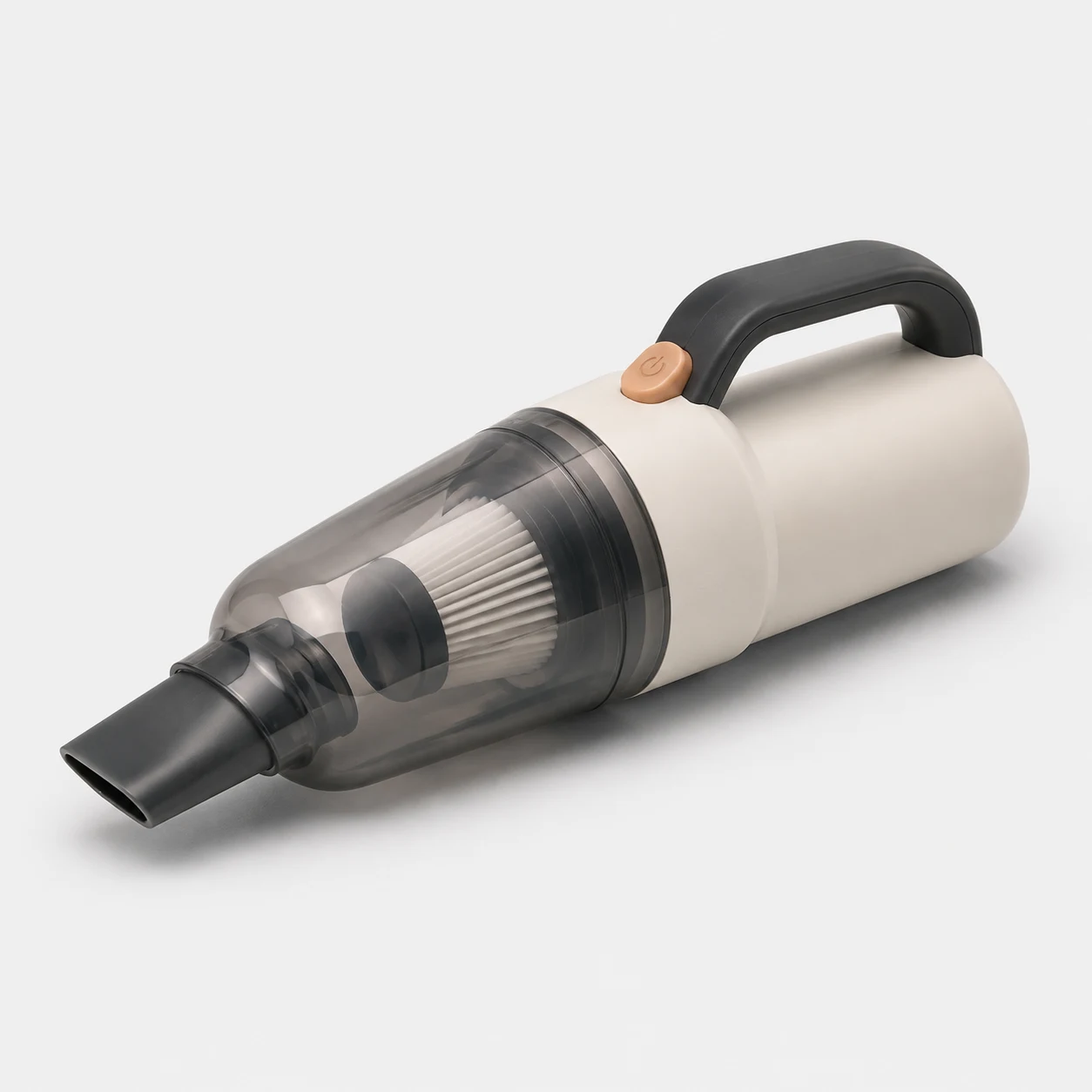
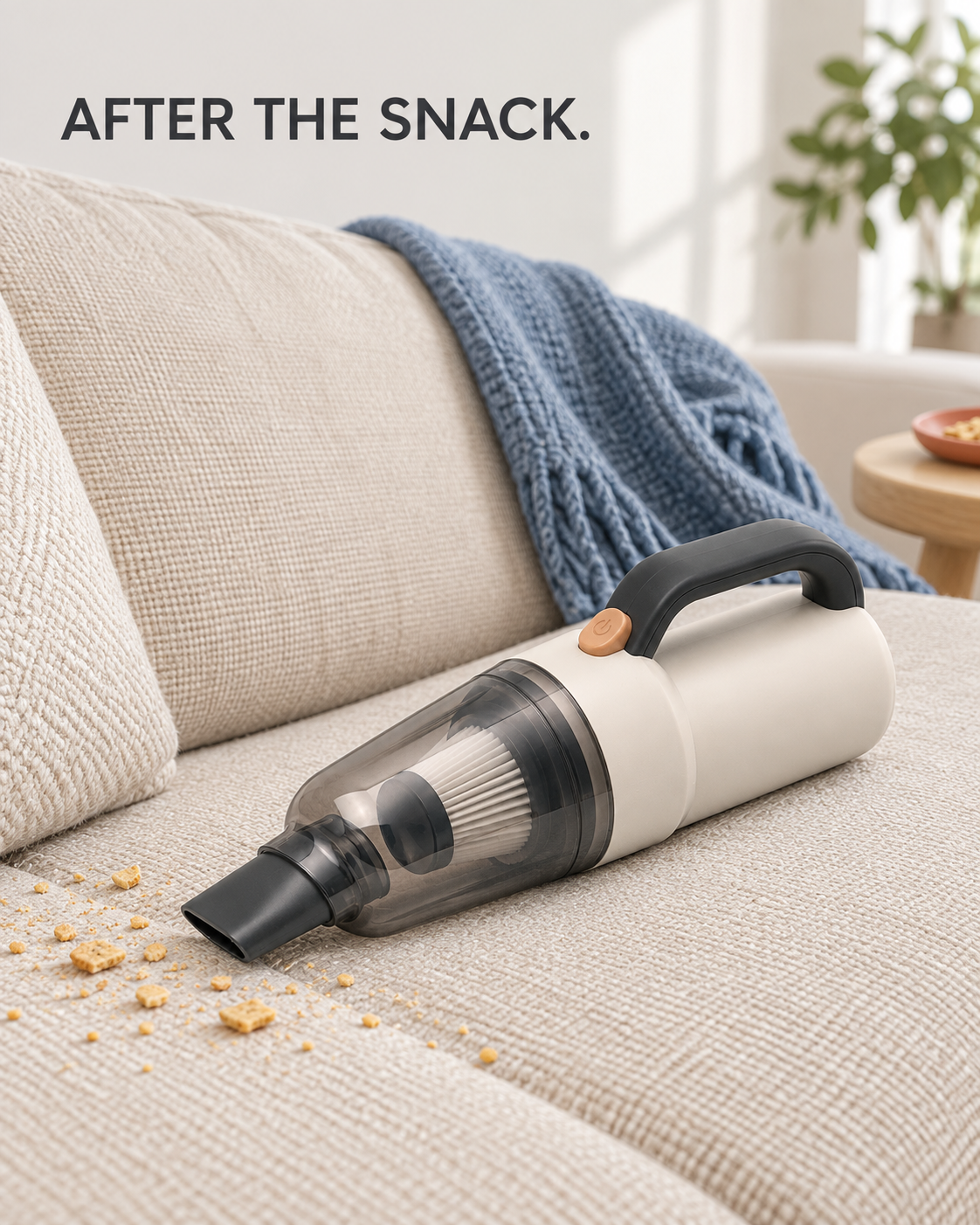
Back to the pngpng handheld-vacuum reference below. My choice: explain a use through an everyday situation, place the product near the small problem, and leave offers aside. This is an independently created draft, not a collage or redrawing of someone else's ad. It answers one question: when would I use this?
Product reference
 Enlarge image
The draft made for this article
 Enlarge image
The situation is after a snack: a light sofa, a cushion seam and dry cracker crumbs. The nozzle points toward the small mess. The machine is at rest. There is no flying debris, before-and-after stain demonstration or dramatic suction trail. The headline names a moment without promising a cleaning speed.
- Kept
- An everyday situation, product close to problem, and one message in one image.
- Not transferred
- Brand names, original ad lines, headlights, wet stain removal, discounts or retailer endorsement.
- Still to verify
- Whether the actual product handles dry crumbs on this fabric; whether nozzle, filter, button and scale match the real item.
The draft still has a weakness. The throw and sofa back occupy a lot of space; the crumbs may be too subtle at feed-thumbnail size. My next check would be simple: can someone recognize vacuum plus sofa crumbs without an explanation? If not, reduce the background and move closer instead of adding another selling point. That needs reader or user feedback, not a claim that clicks have already improved.
There is another limit we cannot skip. The reference itself is an AI example, with no corresponding physical product test. If a seller's actual machine is unsuitable for that surface, the scene needs replacing. Changing a brand name does not turn another product's use case into a fact about yours.
Leave the library with a brief you can use
The useful output is not make something premium like these three pictures. It is a brief with decisions already made. Adapt this one only after replacing its assumptions with your own product facts.
Product: use my real product photographs and confirmed specifications. Do not add features or accessories. Question to answer: when would a buyer use this at home? Idea to borrow: one recognizable everyday moment, with the product close to the small problem. This scene: dry cracker crumbs beside a light sofa cushion after a snack. Use only if the actual product is suitable for this surface. Composition: preserve the whole product; nozzle toward crumbs; few props. Product and context must remain recognizable at thumbnail size. Headline direction: AFTER THE SNACK. No unverified speed or performance claims. Do not copy: brand names, original ad wording, discounts, certifications, headlights or wet-cleaning demonstrations. Before use: do components match the physical item? Is the implied use supported? Does the landing page explain that same use?
Editable Chinese and English briefs, source links and the pngpng draft. The download does not include the original brand's advertising images.
- Start with one buying question and a few relevant ads, rather than a collection target.
- Record the advertiser, source ID, visible content and the idea you would borrow.
- Translate it into your own product's situation, including what must not transfer.
- Make a draft, check facts and readability, then decide whether to test it. A long display period alone does not prove profitability.
If you sell something else, do not force the sofa-and-crumbs scene onto it. A bag might start with retrieving something during a commute; apparel might start with a specific wearing occasion. The point is a recognizable moment your product genuinely belongs in, not simply a different background.
Key takeaways
- Save the buying question an ad answers, not just its colors and layout.
- A competitor's features, offers and brand credentials do not transfer to your product.
- Finish your research with a usable brief, not another folder of screenshots.
Instead of asking how to reproduce an ad, ask which buyer question it answers, and whether your product can honestly give the same answer.
Further reading
Sources checked: