Say you launch three images. One spends $60 for two purchases; another spends $15 for one. The second looks half as expensive. Should you move all the budget to it? I would pause: we know it got an early order, not that it can keep producing inexpensive ones.
Name the two ideas you want to compare
 Enlarge image
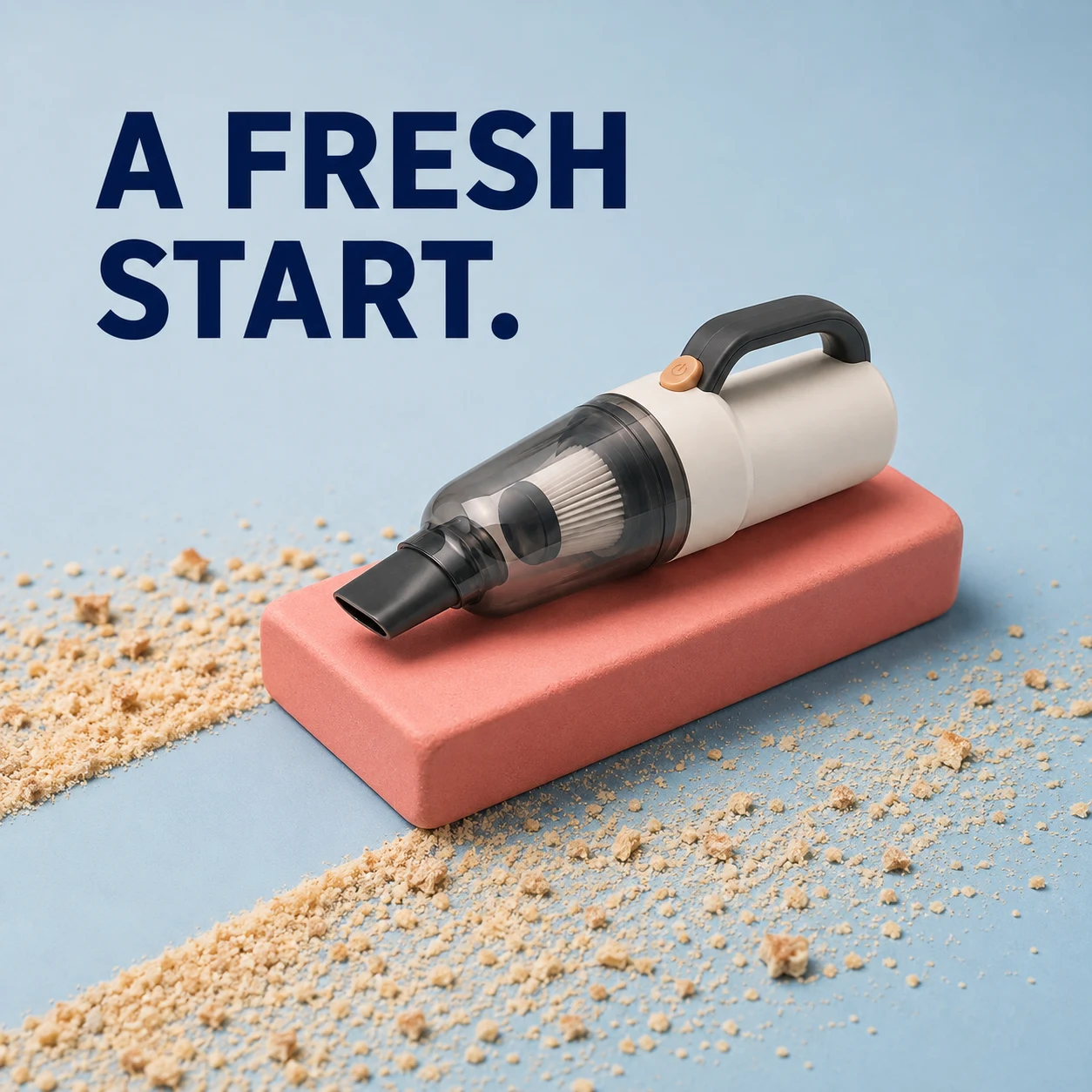
The eraser invites two quite different readings. Someone might immediately understand wiping away a mess; someone else might see a machine on a pink plinth. Our ability to explain it does not establish that a shopper understands it.
 Enlarge image
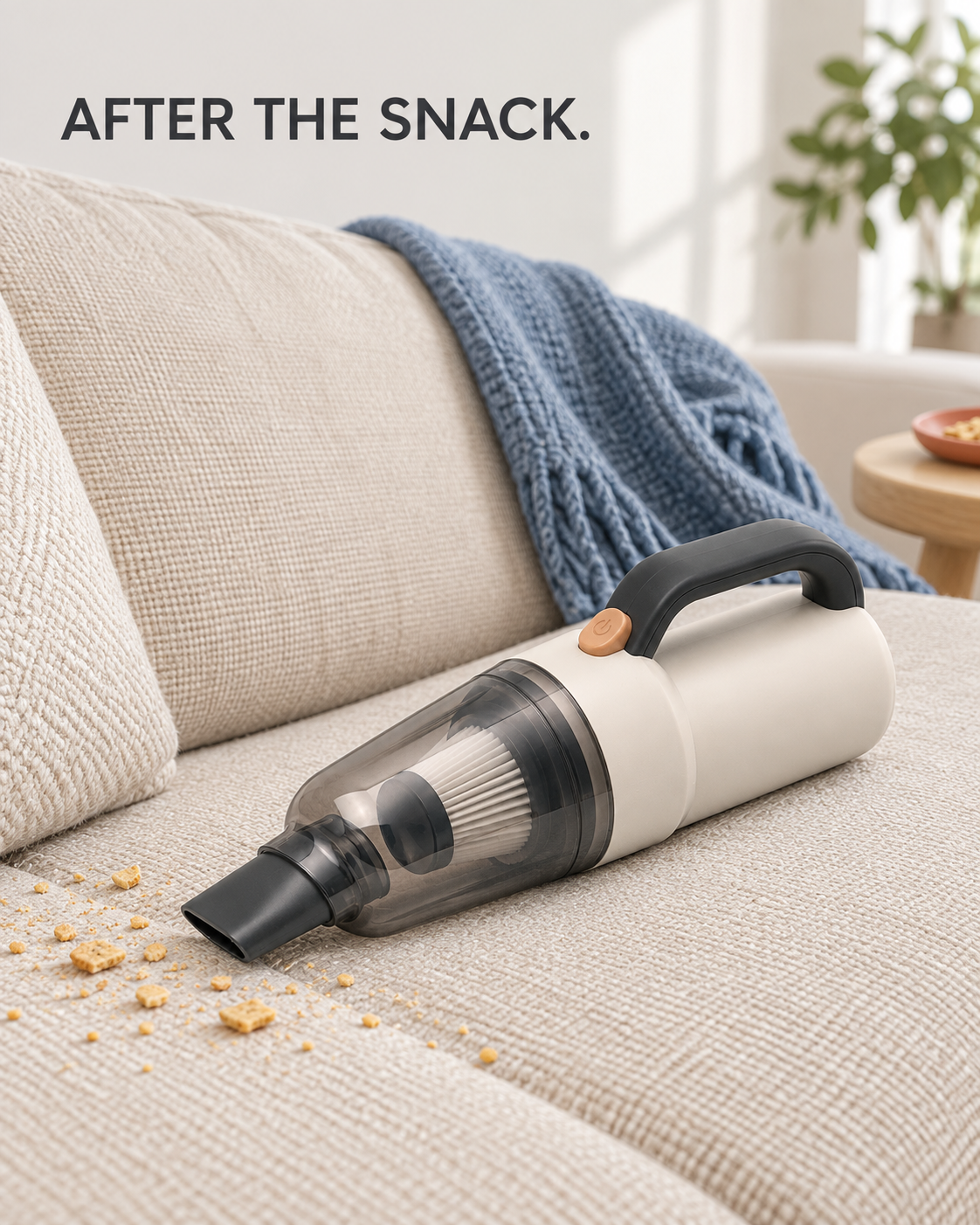
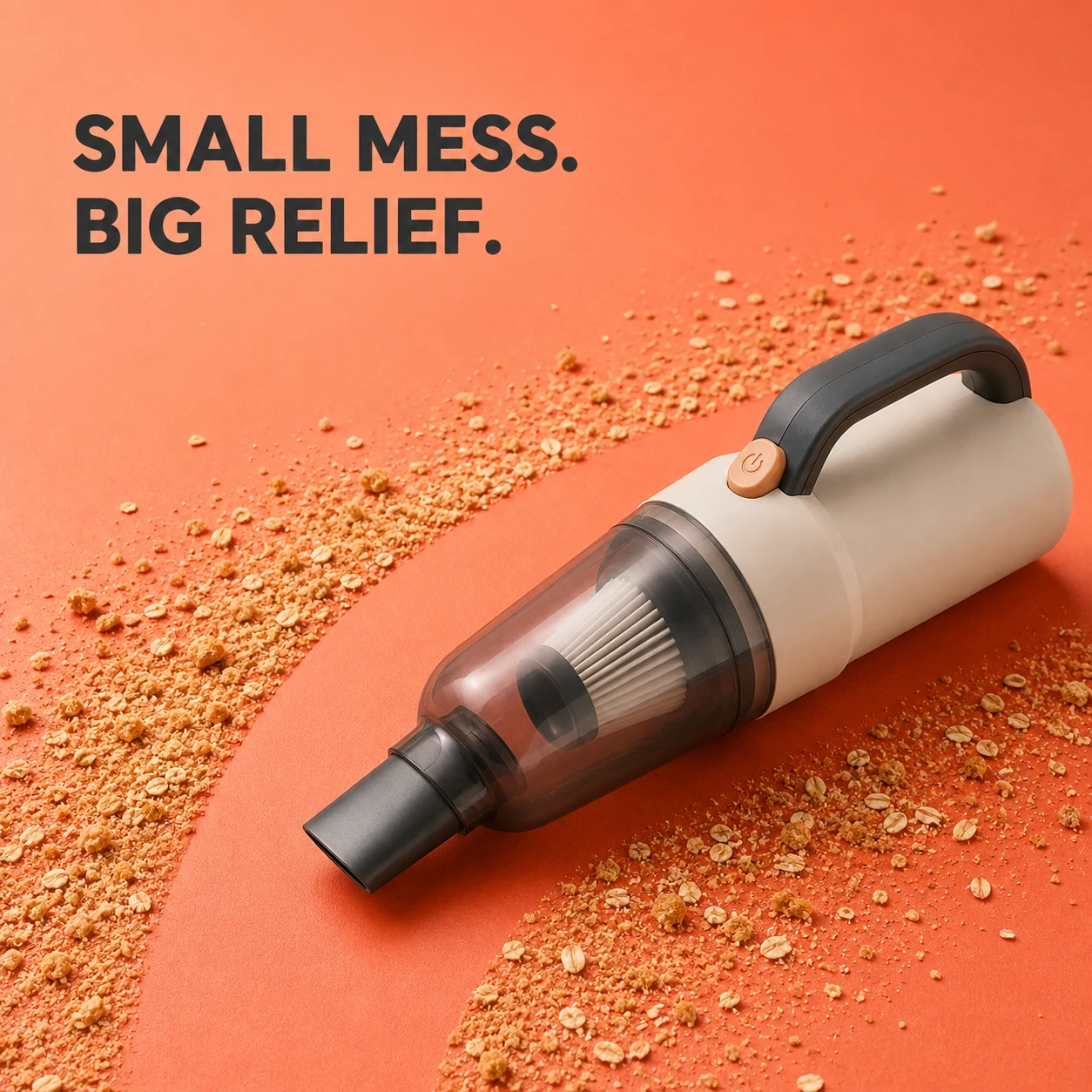
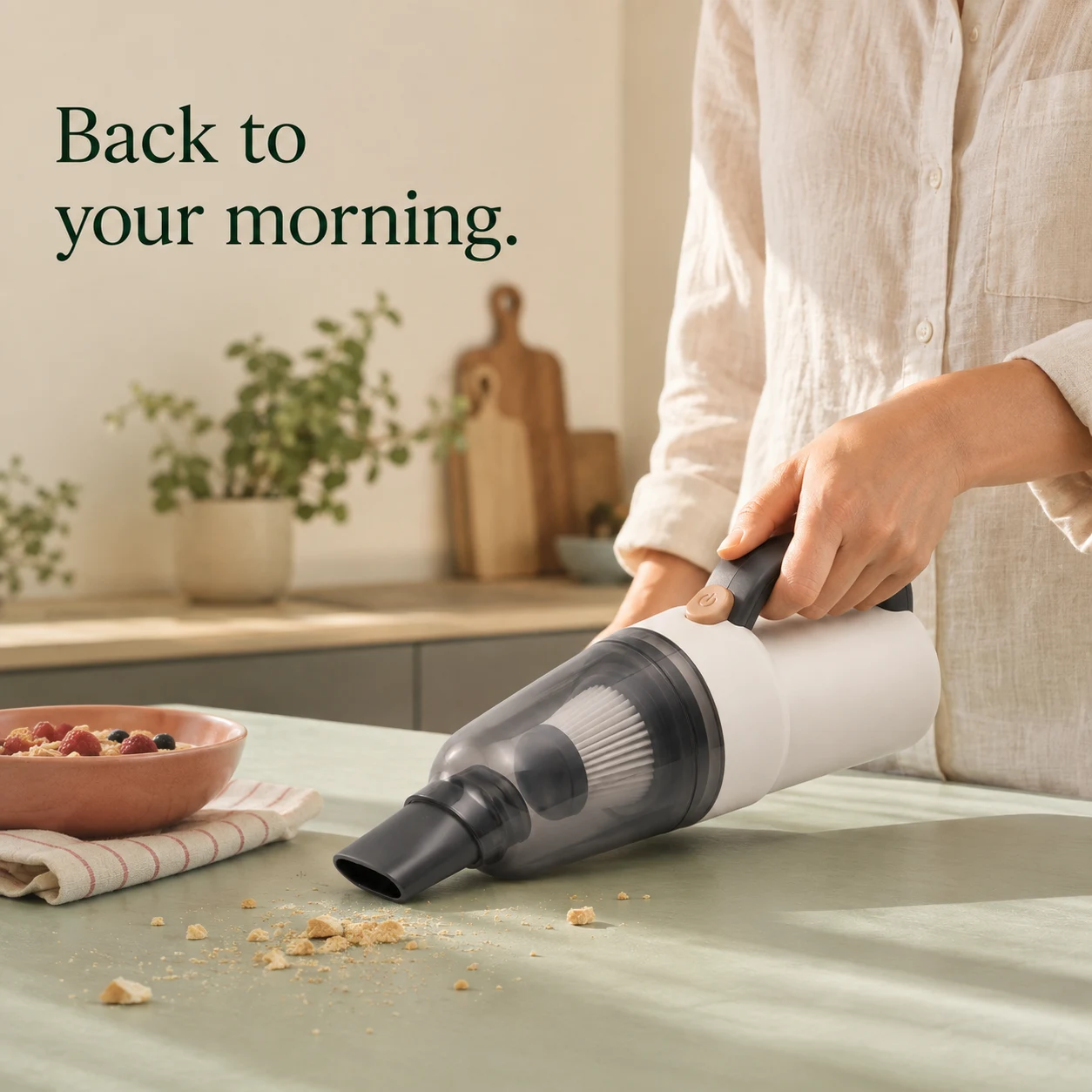
I would phrase the first question as: for someone new to this product, does a morning cleanup or an eraser metaphor make its purpose easier to understand? The orange crumb image could wait for another round. There is no need to fund every idea at once; fewer questions give each one a chance of being answered.
For basic comprehension, first show each image separately to people unfamiliar with the product. Without explaining it, ask what is being sold and what problem it addresses, then record their words. That checks understanding, not future sales. For paid delivery, the question becomes which direction can bring purchases under comparable conditions. A lower purchase cost alone would not prove that viewers understood the eraser metaphor.
Choose a direction before testing a detail
The morning and eraser pictures change color, people, setting and the headline inside the image. You are comparing two packages of ideas. Even if one performs better, that cannot establish that blue backgrounds beat warm ones.
To ask whether a headline helps, make two versions within one direction. Keep the product, composition and other copy unchanged; change the headline you agreed to test. Record automatic creative treatments too, or what appears may differ from the two versions you submitted.
Putting images into an ordinary ad group is not automatically a fair randomized experiment. A causal question needs an experiment appropriate to the platform and ad type. If you cannot do that yet, call the result concept exploration rather than turning an observation into a firm conclusion.
What does one $15 order tell you?
Return to the hypothetical example. These figures illustrate a decision, not actual performance for the three images. The order counts are too small to declare a statistically established winner.
| Hypothetical record | What we can calculate now |
|---|---|
| A: $60 spent, 2 purchases | Cost per purchase is $30. |
| B: $15 spent, 1 purchase | Cost per purchase is currently $15, from just 1 order. |
| C: $60 spent, 0 purchases | No purchases yet. Do not report a $0 cost per purchase. |
If B spends another $15 without another order, its cost per purchase becomes $30. That is not a prediction of deterioration. It shows how easily a small sample can change the ranking. Unequal spend can also come with different impressions, audiences and times, making the comparison less fair in the first place.
If purchases are the goal, do not switch the story to best click-through rate when orders disappoint. Check purchase tracking and stock, then how orders are counted for both versions. How long after a click can a purchase count? Do purchases following only a view count? Have both had the same time for purchases to be recorded? Resolve those differences before ranking results.
Google Ads warns that changing the original campaign or experiment during a run can make results harder to interpret. The relevant principle is to agree on the comparison before changing things, not to copy Google's settings into a Meta test. Google Ads: set up a custom experiment
Fill in the record once and the next step gets clearer
This is a filled-in hypothetical record, not a Meta dashboard screenshot or account setup tutorial. Suppose we compare two vacuum concepts and are willing to spend at most $120 in total. That amount illustrates the record; it is not a recommended budget.
- Question
- Is morning cleanup or the eraser metaphor worth further creative work? Explore directions without calling this a randomized experiment.
- Versions and differences
- A: morning cleanup. B: eraser metaphor. Setting, color and in-image headline differ; these are packages of ideas.
- Keep consistent
- Product, price, landing page, country and selected placement, with purchases as the goal. Record automatic creative settings and do not quietly change them mid-run.
- Counting orders
- In this example, count purchases within 7 days of a click, excluding view-only purchases. Use the same window for both; available settings depend on the account.
- Spend and review
- Combined limit: $120. Confirm account controls and ownership first. Check spend and faults the next day; stop at the limit. A review date does not guarantee enough evidence.
- Current result
- A: $60, 2 purchases. B: $15, 1 purchase. Total: $75. The remaining $45 is not a requirement to keep spending.
- Decision now
- Do not reallocate the entire budget. Small samples and unequal spend only make B worth watching, not an established win for the metaphor.
- Next action
- Check recorded purchases and tracking for both. Continue within the original limit only if you choose to and there is no fault. At the limit, an unclear result stays inconclusive; no automatic budget increase.
Missing shipping costs, failed payment or unavailable stock are not reasons to wait for a larger sample. Pause affected ads and repair the store. If later evidence justifies more work on a direction, compare one specific change next, such as two headlines on the same morning image, without changing the offer and page at the same time.
Use this blank record for your own product
Question to answer: This round is: concept exploration / single-change comparison Versions compared and everything that differs between them: Conditions to keep consistent: product, offer, page, audience, placement, other copy Primary measure, purchase attribution definition and observation window: Planned spend limit, review date and problems that require a pause: Actual spend, impressions, clicks, purchases and page issues: Current decision: continue exploring / fix a problem / inconclusive What this round cannot tell us: One question for the next round:
There is no universal number of days that guarantees an answer for every product. If you reach the spending limit without enough evidence, you can stop and review. Do not keep adding money simply to produce a winner. A limit written here is only a plan; actual spending still needs to be managed in the account.
A useful conclusion might be: B is worth another look, but we do not have enough evidence to move the entire budget. It is less dramatic than “B wins,” and much more useful for deciding what happens next.
Key takeaways
- Write the question before comparing results, not after finding a flattering number.
- Unequal spend and small samples do not establish a winner after its first order.
- Separate concept exploration from a controlled comparison, and allow an inconclusive result.
Fill in the first six lines of the record before uploading your next batch. Decide what you want to learn and when to review it before looking for the most flattering number.
Further reading
Sources checked: